The Murders In The Rue Morgue

Edgar Allan Poe's "The Murders in the Rue Morgue," published in 1841, is widely considered the first modern detective story. It introduced the brilliant, eccentric detective C. Auguste Dupin and his unnamed narrator, setting a template for countless detective stories that followed. Beyond its historical significance, the story explores themes of reasoning, deduction, and the power of observation in solving seemingly impossible crimes.
The Impossibility of the Crime Scene
One of the central aspects of "The Murders in the Rue Morgue" is the seemingly impossible nature of the crime scene. Madame L'Espanaye and her daughter, Mademoiselle Camille L'Espanaye, are found brutally murdered in their locked apartment on the Rue Morgue. The windows are locked from the inside, the chimney is too narrow for a human to pass through, and the door is bolted shut. The physical evidence suggests an act of extreme violence, yet there appears to be no conceivable way for the perpetrator to have entered or exited the room.
The Locked Room Mystery
The locked room mystery is a staple of detective fiction, and Poe essentially invented it here. The challenge for the detective is to reconstruct the events that led to the crime, given the seemingly insurmountable obstacle of the sealed room. Dupin's approach hinges on analyzing the details that others have overlooked and applying rigorous logic to find a solution. This sets the stage for his unique method of deduction, distinguishing him from traditional police methods.
Must Read
Dupin's Method: Reasoning and Deduction
C. Auguste Dupin is not a traditional investigator. He is an analytical thinker who relies on reasoning, observation, and psychological insight to solve the mystery. Unlike the police, who are focused on gathering physical evidence and interviewing witnesses, Dupin emphasizes understanding the mindset of the perpetrator and the victim.
The Power of Observation
Dupin’s success is largely attributed to his keen observational skills. He pays attention to details that others dismiss as insignificant, recognizing their potential importance. This is exemplified by his careful analysis of witness testimonies, where he notices inconsistencies and peculiar phrasing that point to a different understanding of the events. For instance, the witnesses cannot agree on the language they heard the perpetrator speaking, hinting that it might not have been human at all. He applies what he calls "ratiocination," a combination of logic and intuition, to arrive at his conclusions.

Understanding the Criminal Mind
Dupin also demonstrates an understanding of criminal psychology. He seeks to recreate the thought processes of the murderer, putting himself in their shoes to understand their motivations and actions. This allows him to identify the type of being capable of such brutal and seemingly irrational violence. He understands that the extraordinary circumstances of the crime require an extraordinary explanation.
The Solution: An Orangutan and Its Keeper
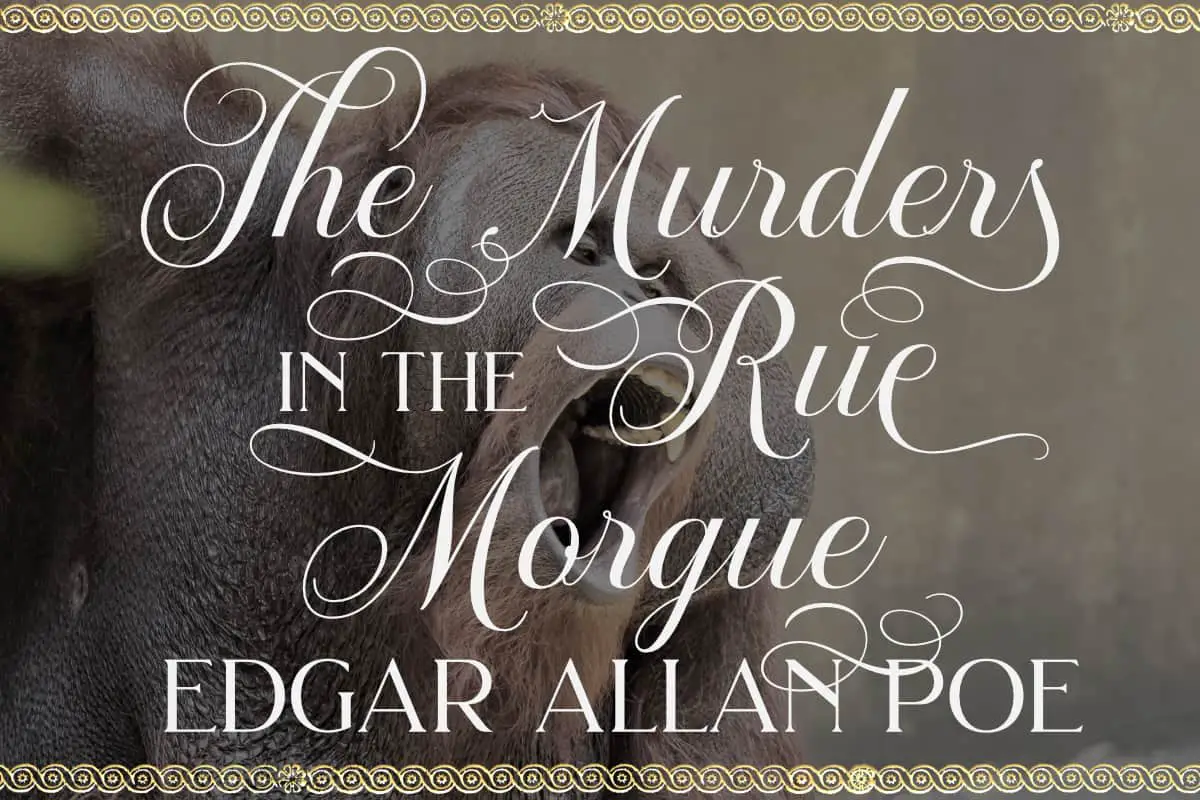
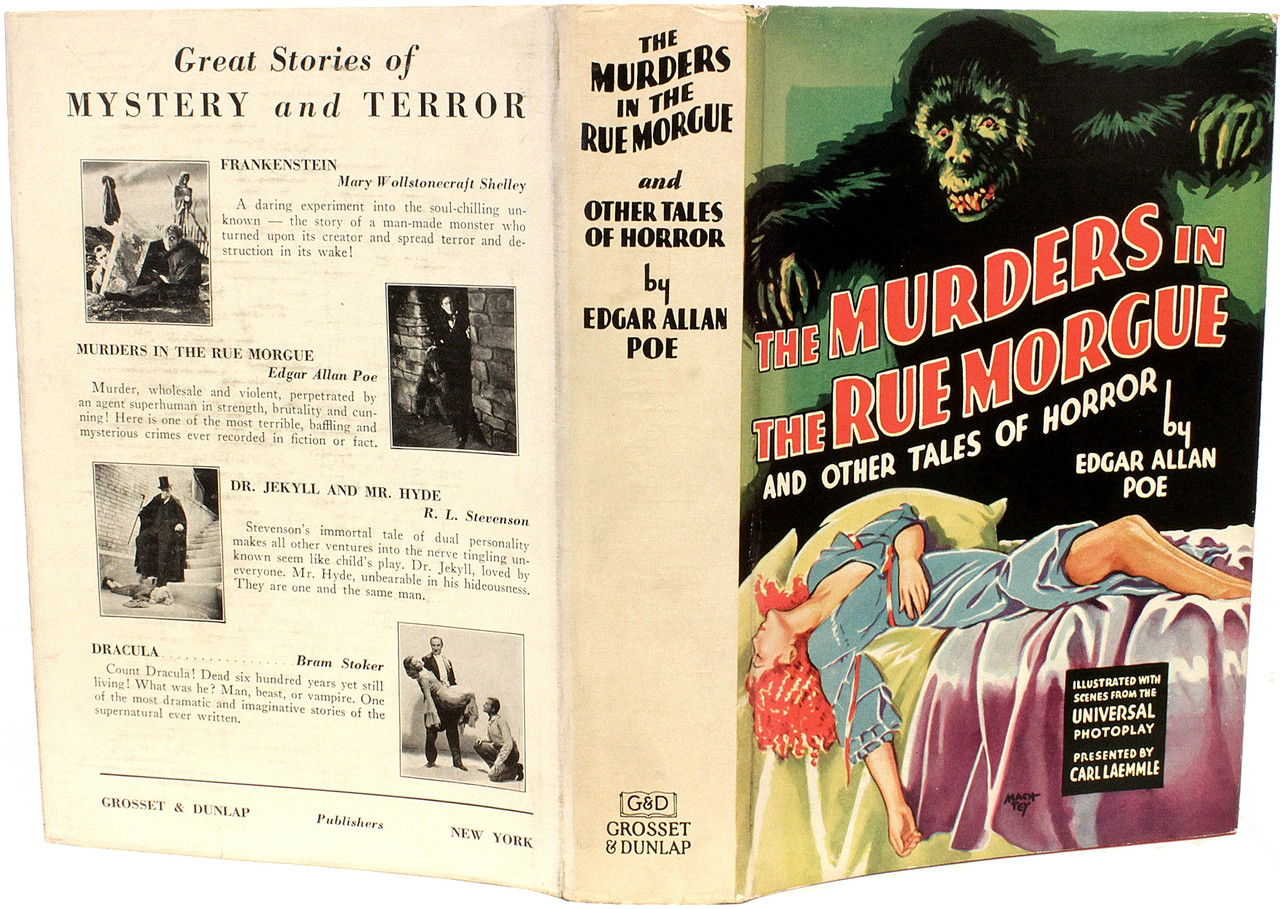
The seemingly impossible crime is ultimately solved by Dupin through a combination of astute observation, logical deduction, and understanding of the unlikely. He concludes that the perpetrator was not a human, but an orangutan. The orangutan, having escaped from its owner, committed the murders in a fit of uncontrollable rage and terror.
The Sailor and the Advertisement
Dupin's final step involves placing an advertisement in a local newspaper, describing the orangutan and offering a reward for its return. This advertisement leads the sailor, the orangutan's owner, to reveal himself. The sailor recounts the circumstances of the orangutan's escape and its violent rampage, confirming Dupin's theory. The sailor, while not directly involved in the murders in a malicious way, is still indirectly responsible due to his negligence in controlling the animal.

The Significance of Poe's Innovation
"The Murders in the Rue Morgue" is not just a thrilling mystery; it's a foundational work in the detective genre. It established many of the conventions that would define detective fiction for generations to come.
The Archetype of the Detective
Dupin is the prototype for the brilliant, eccentric detective, a character who relies on intellect and observation rather than traditional law enforcement methods. This archetype has been repeated countless times in literature and film, from Sherlock Holmes to Hercule Poirot, showcasing the enduring impact of Poe's creation. His eccentricities, such as his preference for darkness and his aversion to crowds, contribute to his image as an outsider, someone who can see things others cannot.
The Importance of Analytical Reasoning
The story emphasizes the importance of analytical reasoning in solving complex problems. Dupin's method of deduction, focusing on meticulous observation and logical inference, provides a framework for approaching mysteries and puzzles. This approach extends beyond the realm of crime solving, demonstrating the power of critical thinking in various aspects of life.
The Birth of a Genre
Beyond its impact on character and methodology, "The Murders in the Rue Morgue" defined the genre of detective fiction itself. It established the elements of a central mystery, a seemingly impossible crime, a brilliant detective, and a logical solution, creating a template for countless stories that followed. The story's success paved the way for the development of a rich and varied genre of crime fiction.
Real-World Applications and Lasting Impact
The principles of deductive reasoning and observation, as exemplified by Dupin, have applications far beyond the realm of fictional crime solving. These skills are essential in fields such as science, medicine, law, and even everyday problem-solving.
Forensic Science
The emphasis on meticulous observation and analysis of evidence is a cornerstone of modern forensic science. Techniques such as DNA analysis, fingerprinting, and crime scene reconstruction rely on the same principles of careful observation and logical deduction that Dupin employs in "The Murders in the Rue Morgue." Real-world crime scene investigators often analyze the minute details of a crime scene, just like Dupin, to reconstruct the events that took place. For example, analyzing blood spatter patterns can reveal the position of the victim and assailant during the crime, providing crucial information for solving the case.
![[ HORROR ] THE MURDERS IN THE RUE MORGUE BY EDGAR ALLAN POE [ FULL](https://i.ytimg.com/vi/GJa7tqqpw2Q/maxresdefault.jpg)
Data Analysis
In the field of data analysis, the ability to identify patterns, anomalies, and inconsistencies in large datasets is crucial for making informed decisions. Just as Dupin analyzes witness testimonies to uncover the truth, data analysts use statistical methods and visualization techniques to identify meaningful insights from complex data. For example, identifying fraudulent transactions in financial data requires the same attention to detail and analytical thinking that Dupin demonstrates in his investigation.
Medical Diagnosis
Medical diagnosis also relies heavily on observation and deductive reasoning. Doctors use their knowledge of anatomy, physiology, and pathology, combined with careful observation of patients' symptoms and medical history, to arrive at a diagnosis. The process is similar to Dupin's method of analyzing clues and evidence to solve a mystery. A doctor might observe a patient's skin discoloration, listen to their heart sounds, and analyze blood tests to determine the underlying cause of their illness.
Conclusion
"The Murders in the Rue Morgue" remains a significant work in literary history, not just as the first detective story, but as a testament to the power of human reason and observation. It encourages us to look beyond the obvious, to question assumptions, and to embrace the challenge of solving complex problems. It has influenced generations of writers, detectives, scientists, and critical thinkers. Read (or reread) "The Murders in the Rue Morgue" and reflect on how Dupin’s methods can be applied in your own life to sharpen your critical thinking skills. Consider how your own powers of observation and deduction can be improved, and how these skills can contribute to solving problems in your personal and professional life.


![25 Suspense Books for Free! [PDF]](https://www.infobooks.org/wp-content/uploads/2024/02/the-murders-in-the-rue-morgue-edgar-allan-poe.webp)